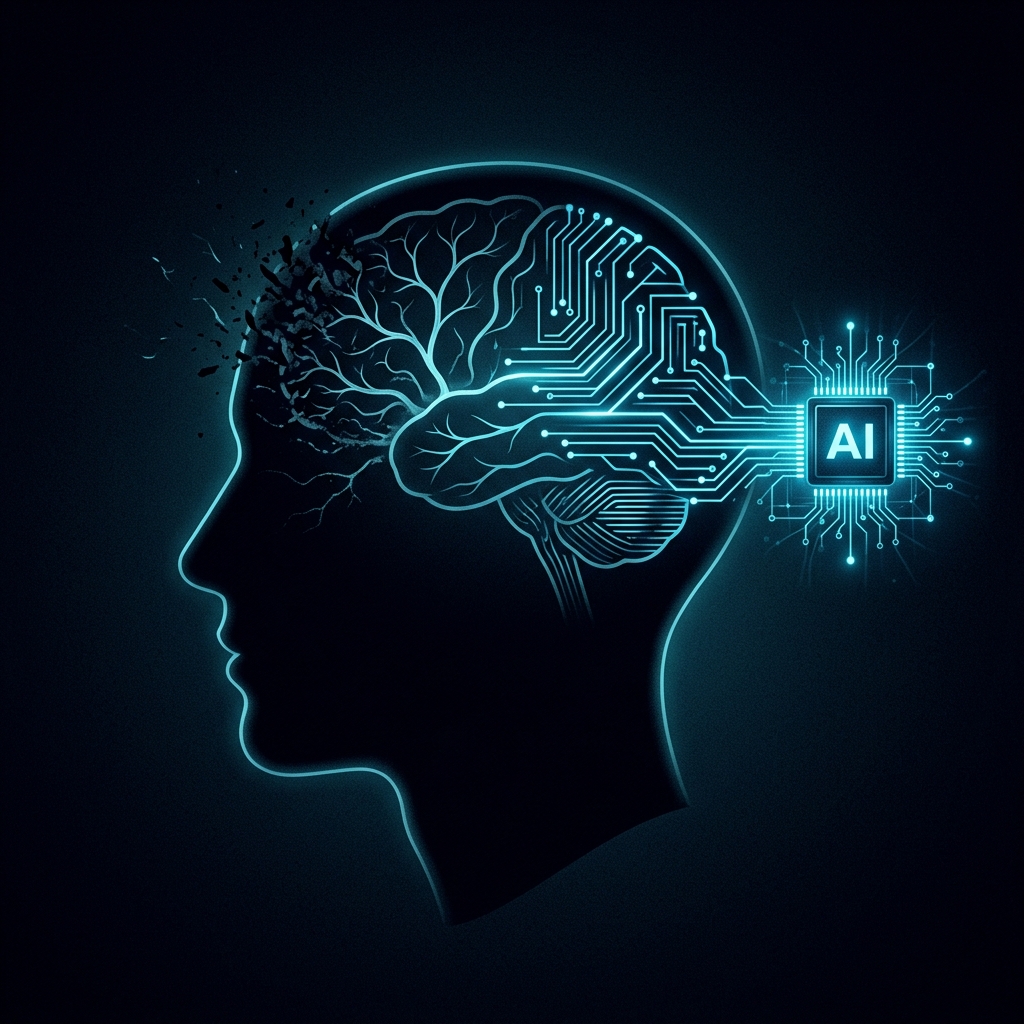
Human beings are hardwired for cognitive conservation. We naturally seek the path of least resistance. When tools promise to remove friction from thinking, we embrace them without hesitation. But friction is not just a nuisance; it is the physical mechanism of neuroplasticity. By outsourcing our synthesis, analysis, and writing to large language models, we are running a quiet biological experiment on our minds. The preliminary results are coming in, and they suggest we are building a massive "cognitive debt."
The Physiology of Neural Pruning
The brain is a hyper-efficient energy allocator. It consumes roughly 20 percent of our daily energy resources despite representing only 2 percent of our body weight. To maintain this efficiency, it constantly engages in synaptic pruning—a process of discarding inactive neural pathways. The biological rule is brutal: use it or lose it. When we offload the work of writing a summary, debugging a logical loop, or structuring an argument to an AI, the corresponding prefrontal cortex networks go quiet. Over time, these unused pathways are physically pruned by microglia, leading to cognitive atrophy.
Passive Delegation vs. Active Symbiosis
It is important to separate how we use AI. Passive delegation is treating AI as a replacement for cognitive struggle—asking it to write a draft from scratch, summarize a book we haven't read, or solve a puzzle without attempting it. This creates an immediate "Google Effect" on steroids: because we know the answer is a prompt away, our brains refuse to commit the underlying concepts to long-term memory. Active symbiosis, however, treats AI as a sparring partner. In this model, you write the code first, struggle with the design, and then use the AI to audit, critique, or challenge your decisions. This preserves the critical mental friction required to learn.
The Illusion of Competence (AI-Induced Dunning-Kruger)
Generative AI creates a dangerous psychological feedback loop. Because it returns beautifully structured prose and syntactically correct code in seconds, we experience the illusion of understanding. We mistake the tool's performance for our own competence. This cognitive inflation reduces our natural skepticism. We stop verifying the source, auditing the logic, or questioning the premises. We become passive editors of machine-generated thoughts, gradually losing the capacity to construct complex, original concepts from first principles.
Reclaiming Friction: A Protocol for Intentional Cognition
To prevent cognitive foreclosure—where we lose the ability to build these cognitive skills entirely—we must establish personal protocols for intentional cognition. First, adopt the "Struggle First" rule: never prompt an AI for a solution until you have spent at least 15 minutes trying to solve it yourself. Second, replace passive prompting with Socratic interrogation. Instead of asking "fix this code," ask "explain the structural flaw in this function and let me write the fix." Finally, write. Writing is not merely a tool for communicating thought; it is the physical process of thinking itself. If you let a machine write for you, you are letting it think for you.